The Clinical and Professional Practice area has been busy this year working on a number of projects across multiple areas.

Stakeholder Engagement
Health Authority Engagement:
Continue to engage with Health Authorities, FNHA and PHSA teams across the province and the practice leads and practice support teams to support adjustments to Position Descriptions and development of decision-making tools that facilitate the engagement of RCC’s within the various teams Health Authorities environment.
ICBC:
Continue to attend virtual and in-person meetings with ICBC in Vancouver to participate in the Health Care Advisory Group along with many other professional representatives to focus on the new service agreements and Code of Ethics.
FNHA:
beginning a new relationship with FNHAs new Practice Support Team for future projects
University Engagements:
Continuing to advocate for BCACC Standards of Clinical Practice and Code of Ethical Conduct to be the integral part of ethics courses in BC, and the consistency of comprehensive evaluations of new professionals prior to graduation.
Professional Practice Support
Practice support continues to evolve as a service to our members.
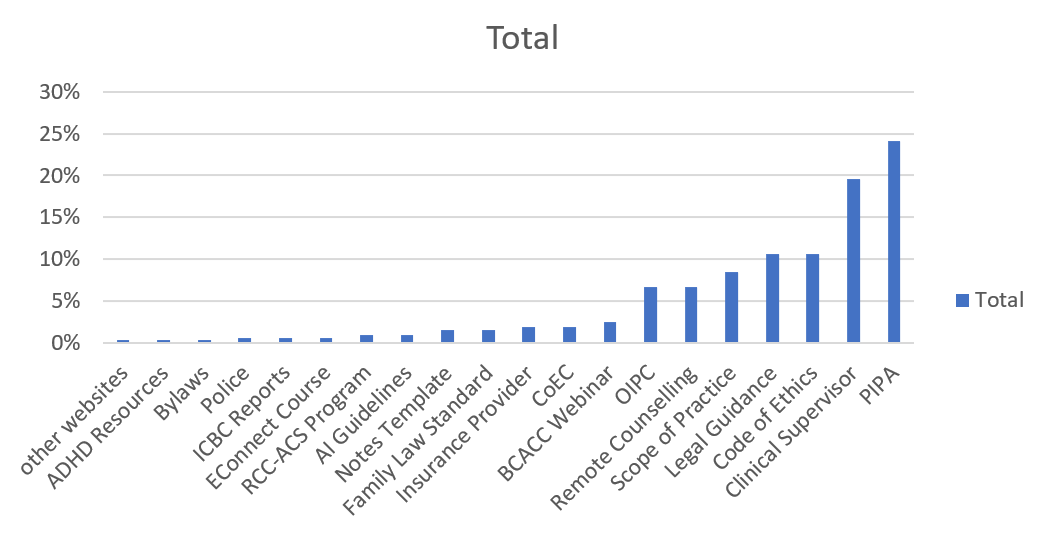
We have completed an audit of all the resources on our website in order to identify what resources need updating and prioritize those updates for 2026 to focus on the member needs. We have also been identifying new resources to develop which continue to meet gaps in resources as noted by the Practice support calls and emails we have been tracking this year such as the Guidelines on working with Psychedelics, Family Law Standard update, the AI Guidelines.
Practicum Toolkit

Since the beginning of the year there has been a group working hard on the Practicum Toolkit which has gone to 9 sites to Pilot for 6 months and to gather feedback. This toolkit incorporates many resources and tools to assist new practicum sites such as evaluation tools adapted from the BCACC Entry to Practice Competencies, and that addresses the various needs of students, supervisors and the public.
This will go to print and be available for Purchase in hard copy and online Summer 2026.
Applied Ethics in Psychotherapy and Counselling Course
In collaboration with various committees and stakeholders, a benchmarking process was undertaken to establish the value of the provision of an in-house, BCACC and BC focused Applied Ethics course. The director of Clinical Practice and Professional Practice and Standards Committee developed the Syllabus for the Ethics course working with Dr Simon Nuttgens, at the conclusion of the benchmarking process to not only meet the needs of newer professionals in BC, but to also provide flexible learning opportunities and fresh deeper strategies for learning and integrating Ethics into their practice.
The Ethics Course integrate 30-36 hours of learning, reflective activities, videos, quizzes and a myriad of resources focused on Ethics in Psychotherapy and Clinical Counselling.
This course is expected to be Live April 20th and is currently open for early Bird pre-purchase and added another robust course to our repertoire of courses in 2026.


Documentation and Record Keeping Course
This course has been developed over the course of the last 12 months, and is not only a response to members’ needs, but also the result of the relationship between OAMHP and BCACC. This course is also a course that incorporates breadth and depth of information, videos, quizzes, discussion and large amounts of resources for members and the mental health profession.
This course adds to the list or rich course material and resources and value being provided for members and will be competitive process and running by late October/ Early November.
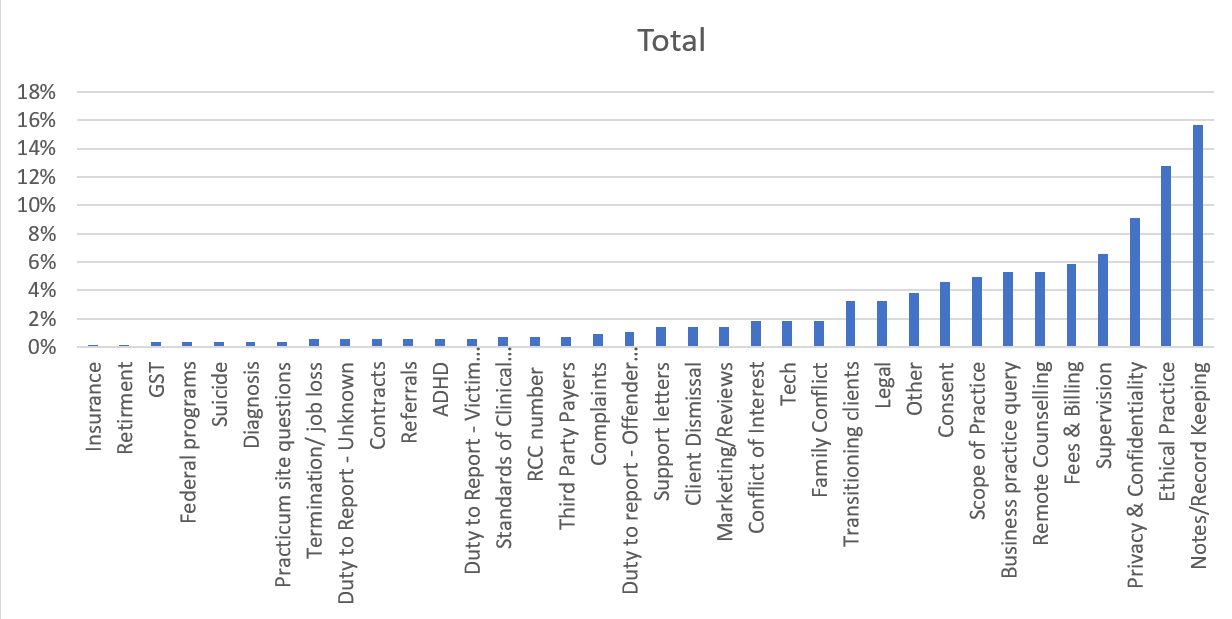
Evolving trends from practice Support
This spreadsheet tracks clinical and practice support calls and emails to staff and monitors trends and needs of members. The practice support service receives average 30 contacts via email or calls per month.
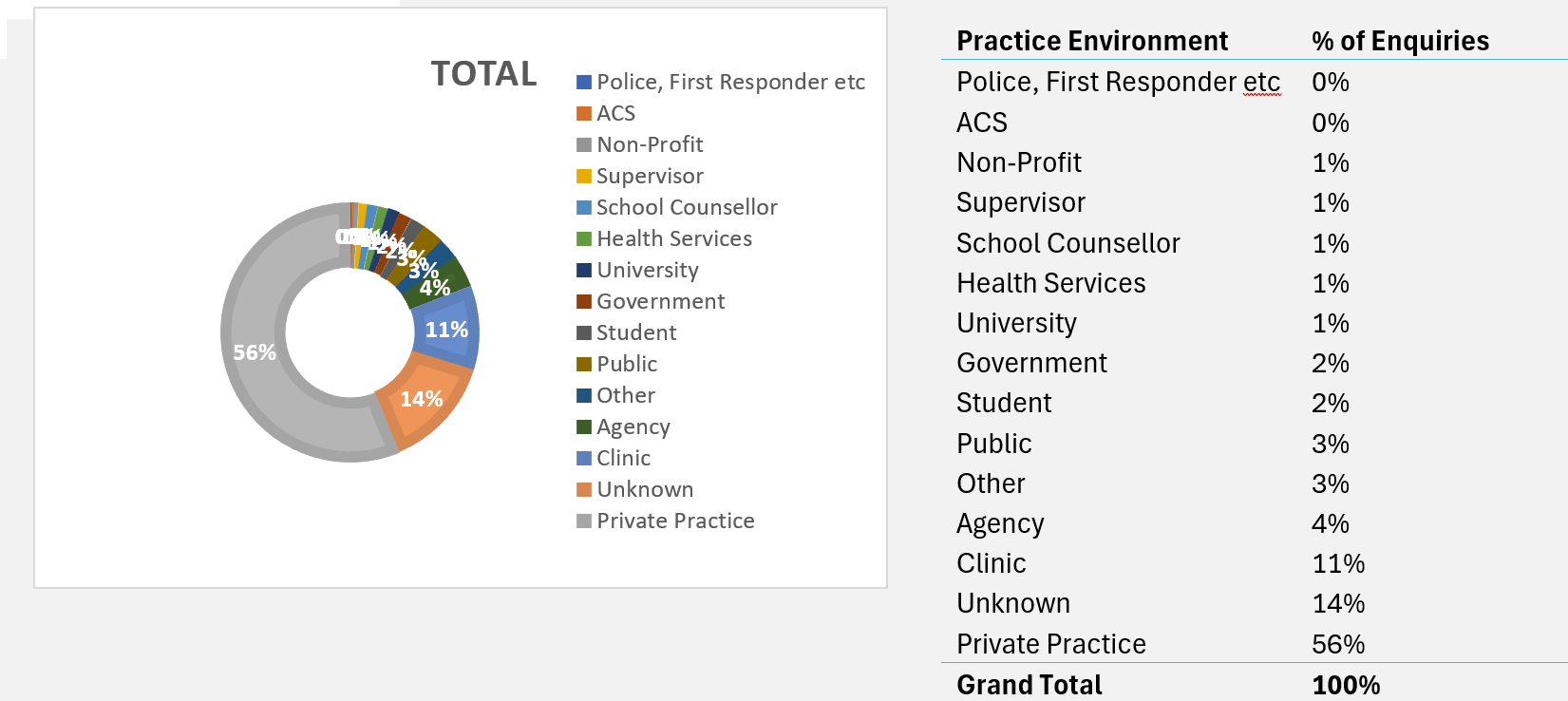
Practice Environment
What percentage of enquiries are from each Practice Environment
What percentage of enquiries are referred to what Primary Additional Resource?